Why this matters now
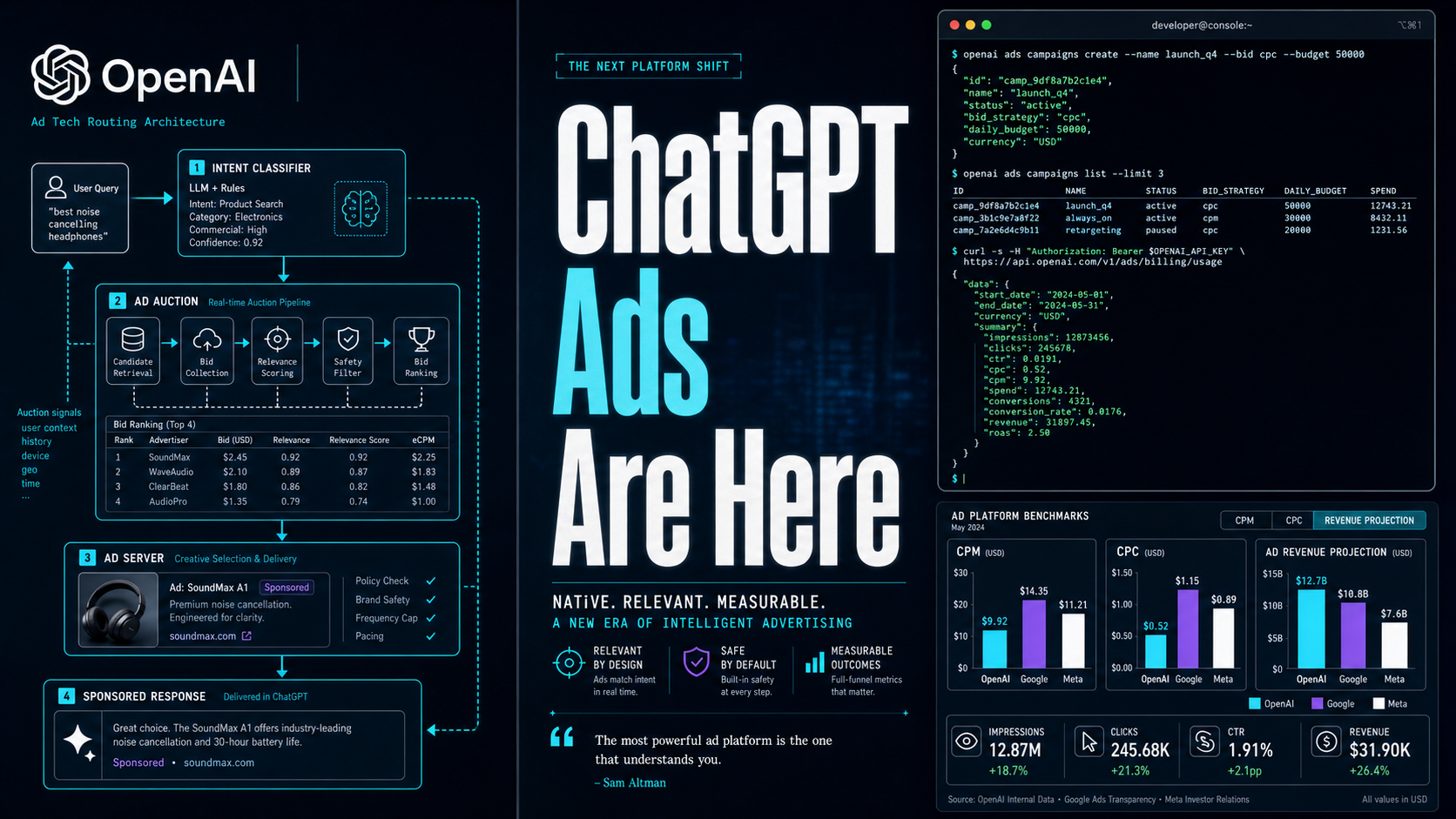
OpenAI flipped the switch on its own advertising network this week, turning ChatGPT from a subscription-and-API business into a three-legged revenue machine. The launch of ads.openai.com makes ChatGPT the first major conversational AI to carry native sponsored content — and arrives just as analysts flag that the company’s $102 billion ad ambitions are already on shaky ground.
The move comes two weeks after reports that OpenAI’s sovereign wealth fund talks signaled a need for diversified revenue beyond subscriptions and API credits. With ChatGPT reportedly burning through cash at a rate that makes the $200 Pro tier and $20 Plus tier look insufficient, advertising is the lever OpenAI has been circling for months — and it’s finally pulling it.
What the platform looks like
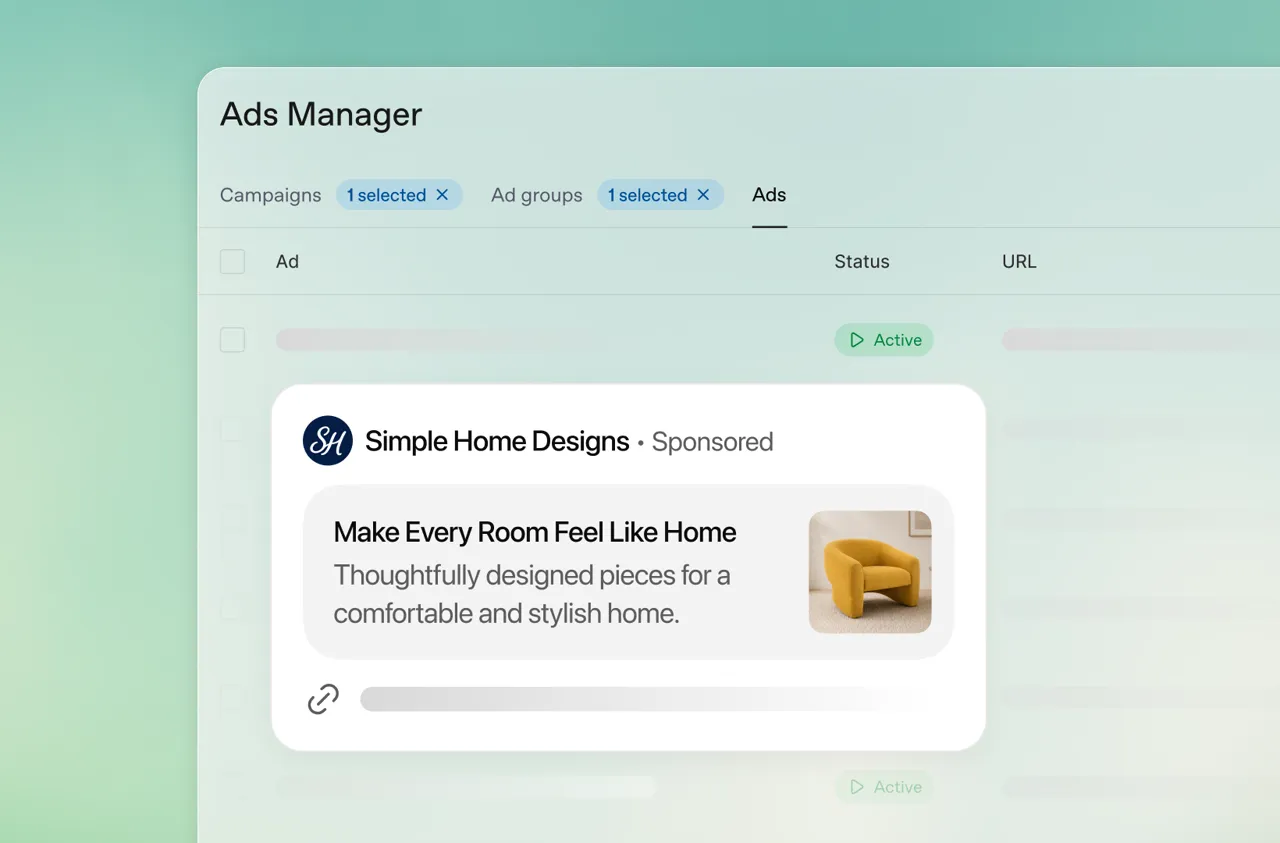
OpenAI published a detailed blog post titled “New ways to buy ChatGPT ads” outlining the full platform. The centerpiece is a beta self-serve Ads Manager where advertisers sign up, add payment info, set budgets, upload creatives, launch campaigns, and view performance — all from one portal.
Key capabilities:
- CPC + CPM bidding — Cost-per-click bidding is now live alongside the CPM (impressions) model that launched in the earlier pilot. OpenAI says CPC matters because “many ChatGPT conversations are active and decision-oriented.”
- Conversions API + pixel — Advertisers can now track post-click actions (purchases, sign-ups, leads) through server-side conversion events and browser pixels.
- Bulk operations — CSV upload for ad details at scale.
- Partner ecosystem — Agency partners include Dentsu, Omnicom, Publicis, and WPP. Technology partners include Adobe, Criteo, Kargo, Pacvue, and StackAdapt.
Best Buy is the launch anchor customer. Amy Adams, the retailer’s VP of Media, said: “Consumers are increasingly turning to platforms like ChatGPT to research and make decisions, so it’s important that we show up in those moments.”
OpenAI is careful to differentiate the ad experience from ChatGPT’s answers. The company states it operates on three principles: answers stay independent, conversations stay private, and users remain in control. Ads are “clearly labeled” and “remain distinct from ChatGPT’s responses.”
The $102 billion question
The ad launch’s reception might have been purely celebratory if not for the revenue targets pinned to it. Multiple outlets reported that OpenAI’s internal forecasts — projecting advertising to hit $102 billion in revenue by 2030 — are already under serious pressure.
- ADWEEK reported OpenAI’s ad business is on pace to miss its own near-term forecast by 90%
- The Information first detailed the $102B 2030 target, a figure analysts called unrealistic
- Business Insider documented “stark doubts” from ad buyers about ChatGPT’s ability to command premium CPMs versus Google and Meta
- Fast Company framed the gap as “a major reality check” for the company’s ad ambitions
Part of the skepticism traces to fundamentals. ChatGPT’s interface is text-first and session-driven, not a scroll-feed where users expect to see ads. OpenAI is betting that “richer context signals” — the detailed, multi-turn conversations users have with the model — will enable targeting that outperforms keyword-based advertising. But that same depth raises privacy questions that advertisers themselves may not want to navigate.
How the model compares
| Metric | ChatGPT Ads | Google Search Ads | Meta Advantage+ |
|---|---|---|---|
| Format | Sponsored text in conversation | Text + Shopping in results | Image/Video in feed + Stories |
| Bidding | CPC + CPM | CPC + CPM | CPC + CPM + CPA |
| Targeting | Conversation context signals | Keywords + user intent | Demographics + behavior |
| Self-serve platform | ✅ Ads Manager (beta) | ✅ Google Ads | ✅ Meta Ads Manager |
| Measurement | Conversions API + pixel | Google Ads + GA4 | Meta Pixel + CAPI |
| Launch advertiser | Best Buy | (organic growth) | (organic growth) |
| Agency ecosystem | Omnicom, Publicis, WPP, Dentsu | All major | All major |
| 2030 revenue target | $102B (disputed) | ~$250B+ estimated | ~$200B+ estimated |
The comparison exposes the gap: OpenAI is trying to jump from zero ad revenue to a Google/Meta-sized business inside four years, a trajectory neither Google nor Meta achieved during their early years.
What this means for builders
For developers and product teams building on or alongside OpenAI, the ad shift carries several implications:
API pricing pressure may ease. If ads become a meaningful revenue stream, OpenAI has less incentive to keep raising API prices — the pressure that drove the summer 2026 price war could moderate.
Model training data gets murkier. OpenAI now has a direct incentive to keep users in longer conversations (more ad exposure), which could subtly influence model behavior. The GPT-5.6 SOL public release already raised questions about alignment incentives; ads add a commercial layer on top.
The “AI-native ad” category is born. If ChatGPT Ads works, every major LLM provider will need an ad strategy — Anthropic, Google (Gemini already has surfaced ads in some contexts), and open-weight hosts serving models through chat UIs. The playbook OpenAI writes here becomes the template.
The partner ecosystem is a moat. Four of the six largest agency holding groups are already integrated. That’s an infrastructure advantage that would take competitors months to replicate.
Decision framework
- If you’re a marketer: ChatGPT Ads is worth testing on a small budget. The context-signal targeting is genuinely novel — the CPC model makes it low-risk to experiment.
- If you’re a developer: Watch for the Ads Manager API. If OpenAI opens programmatic ad buying, it creates a new channel for AI-driven optimization tools.
- If you’re an investor: The 90% miss reports suggest OpenAI is still learning how to sell ads. The technology exists; the sales motion doesn’t yet. The partner integrations give it runway.
- If you’re a regular ChatGPT user: Ads are here and labeled. Whether they stay unobtrusive depends on how aggressive OpenAI gets with placement density over time.
Trade-off: The $100B ambition forces OpenAI to scale ad inventory faster than is comfortable. Early user experience will determine whether ChatGPT becomes a better discovery engine or a worse conversation interface.
Bottom line: OpenAI’s ad launch is a necessary financial hedge, and the platform itself is well-built with real agency buy-in. But the $102B revenue target remains aspirational — the sales motion, user tolerance, and measurement maturity are all unproven at that scale.
Related reading
- OpenAI’s Sovereign Wealth Fund Talks Signal Strategic Shift — the financial pressures driving the ad pivot
- AI Model Price War — July 2026 — how API pricing pressure connects to the need for ad revenue
- GPT-5.6 SOL Public Release — the latest model that ads will now run alongside
Sources
- OpenAI — New ways to buy ChatGPT ads
- ADWEEK — OpenAI’s Ad Business Is on Pace to Miss Its Own Forecast By 90%
- Business Insider — OpenAI faces stark doubts about ChatGPT ads
- The Information — OpenAI Forecasts Advertising to Hit $102 billion by 2030
- Fast Company — OpenAI’s ad strategy faces a major reality check
- Futurism — OpenAI Appears to Be Missing Its Sales Goals by a Vast Margin
About the author
Charles Jasthyn De La Cueva is a full-stack developer and the founder of Open TechStack. He writes about AI engineering, developer tools, and practical model evaluation — grounded in real workflows, not press releases.