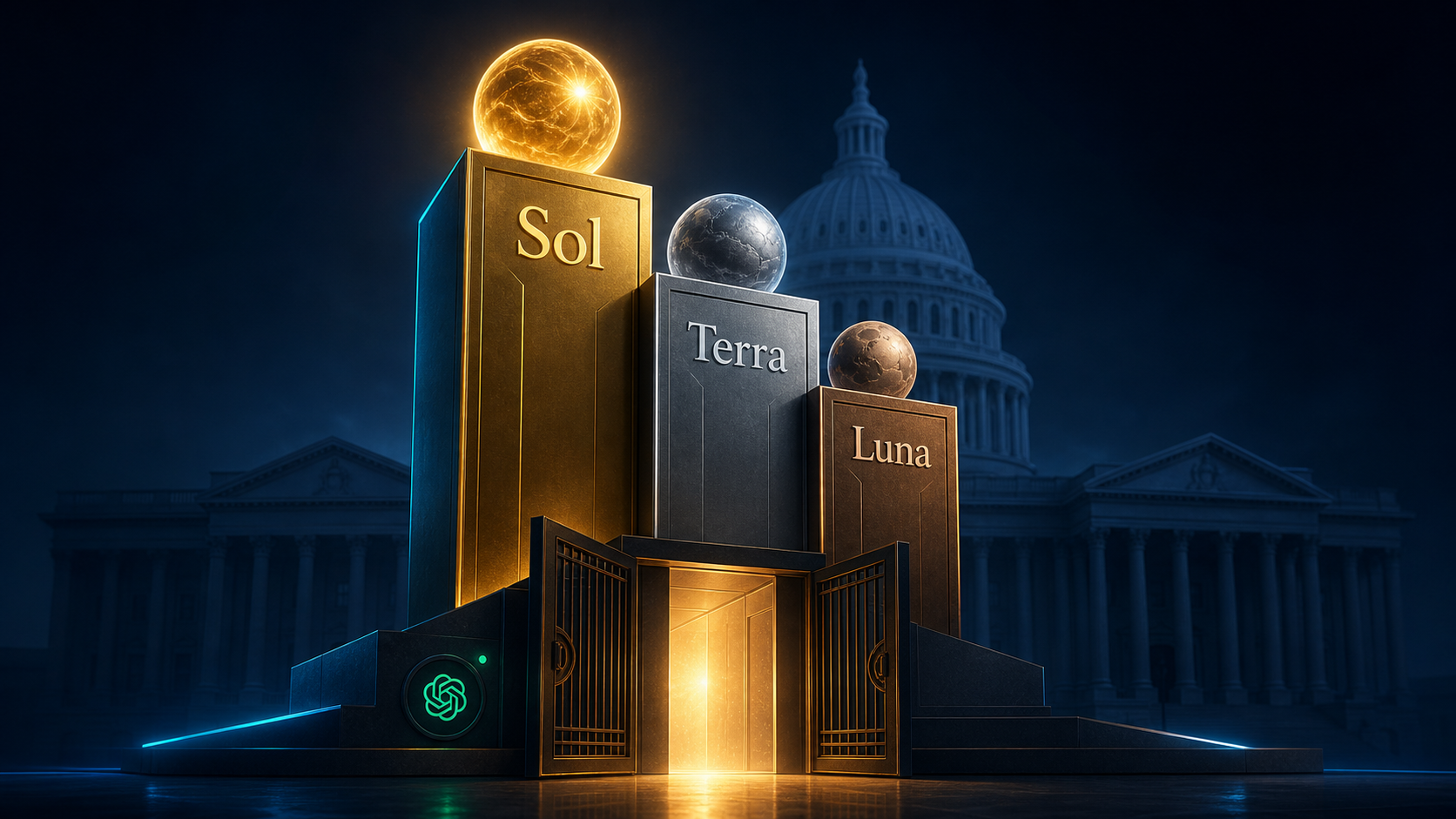
Why this matters now
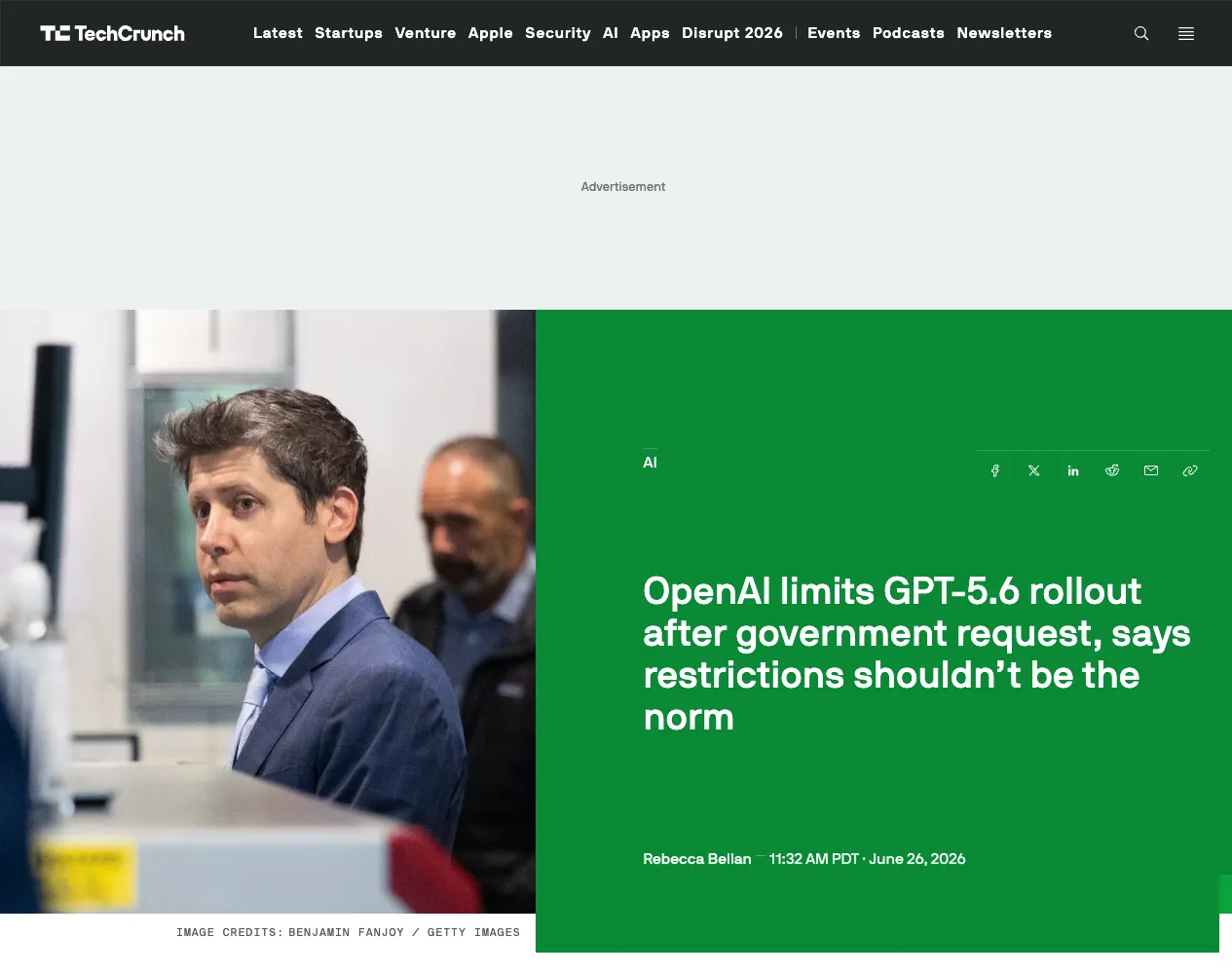
On June 26, OpenAI previewed the GPT-5.6 family — Sol, Terra, and Luna — but access was restricted to a small group of government-vetted partners via API and Codex. General availability was promised “in the coming weeks.”
Multiple signals now point to that public release being imminent — possibly as early as July 9. A Manifold Markets prediction market on “GPT-5.6 released to a meaningful public user group by July 10” has drawn attention, and OpenAI’s stated timeline has consistently been “weeks, not months.” With Fable 5 restored on July 1 and the new executive order framework taking shape, the regulatory bottleneck that held up the preview is clearing.
This post covers what to expect when the gates open — pricing, benchmarks, API migration, and whether Sol changes anything for your stack.
What changes with public access
| Before | After |
|---|---|
| Limited to ~20 government-approved partners | Open API + ChatGPT tiers |
| API-only, no ChatGPT access | ChatGPT Plus, Pro, Team, Enterprise |
| Developer access via Codex only | Direct API with standard auth |
| No guaranteed uptime SLAs | Standard OpenAI availability |
| Preview pricing (honored for early partners) | Published pricing below |
OpenAI’s blog called the preview a “short-term step” — and it was. Fable 5’s restoration on July 1 and the administration’s evolving executive order framework created the regulatory runway for GPT-5.6 to follow. The model family arrives with the same export control framework that now governs Fable 5, Sonnet 5, Opus 4.8, and Mythos 5 — restricted to US-allied users but otherwise open.
The three tiers
| Model | Role | Input / 1M | Output / 1M | Context | Key benchmark |
|---|---|---|---|---|---|
| Sol | Flagship reasoning, long-horizon agentic work | $5.00 | $30.00 | 128K | Terminal-Bench 2.1: 88.8% (base), 91.9% (Ultra) |
| Terra | Balanced, standard agentic coding | $2.50 | $15.00 | 128K | SWE-bench Pro: ~62% |
| Luna | Fast, cheap, high-volume tasks | $1.00 | $6.00 | 128K | General chat, extraction, classification |
Sol remains OpenAI’s most capable model and the highest single-score model on Terminal-Bench 2.1 at 91.9% in Ultra mode — ahead of Mythos 5 (88.0%) and GPT-5.5 (88.0%). The caveat is that Ultra mode consumes significantly more tokens, and Sol’s $30/M output pricing means Ultra tasks are expensive. For most agentic coding work, the base Sol mode at 88.8% is the practical choice.
Terra at $2.50/$15 is the same price as Claude Sonnet 5 standard pricing and delivers competitive agentic coding performance. For teams already using Sonnet 5, Terra is the most natural point of comparison — similar price, similar capability.
Luna at $1/$6 is the budget workhorse. It’s cheaper than Mistral Medium 3.5 on input and roughly comparable on output. For high-volume extraction, classification, and simple chat, Luna is the most cost-effective entry in the GPT-5.6 family.
Where Sol fits against the field
For context with the price guide and recent releases:
| Task tier | Best pick before Sol public | Sol changes this? |
|---|---|---|
| Highest autonomous coding | Claude Opus 4.8 (69.2% SWE-bench) | Sol is competitive but $5/$30 is 2x Opus input cost |
| Best value agentic coding | Claude Sonnet 5 ($2/$10 intro) | Sol is 2.5x more expensive on output — Sonnet 5 still better value |
| Budget agentic coding | Luna / Mistral Medium 3.5 | Luna is the same model — no change |
| Ultra-high-effort reasoning | Mythos 5 (government-gated) | Sol Ultra fills this gap at 91.9% Terminal-Bench |
Sol doesn’t undercut any existing pricing — it enters at the premium tier. Its value is what it makes accessible: the highest agentic benchmark score available to general API users, without the restrictions that still apply to Mythos 5.
API migration from GPT-5.5
If you’ve been using GPT-5.5, the migration is straightforward. All three models use the same ChatCompletions API format:
# Before
model = "gpt-5.5"

# After — pick your tier
model = "gpt-5.6-sol"     # flagship
model = "gpt-5.6-terra"   # balanced
model = "gpt-5.6-luna"    # fast/cheap
Key migration notes:
- Sol uses
gpt-5.6-solfor base mode andgpt-5.6-sol-ultrafor high-effort reasoning. Ultra mode increases token consumption significantly — budget accordingly. - Terra and Luna use
gpt-5.6-terraandgpt-5.6-lunarespectively — no special modes. - All models support the multi-provider routing pattern described in our Laravel tutorial. Add them as additional drivers in your provider config.
- Prompt caching and batch API discounts apply across all three tiers, same as GPT-5.5.
The Sol Ultra question
Sol Ultra (91.9% Terminal-Bench 2.1) is the model worth watching. It’s not a separate tier — it’s Sol in a higher-effort mode that spends more compute per token. OpenAI hasn’t published a separate price for Ultra mode; the token multiplier means you pay more because the model generates more reasoning tokens before responding.
For comparison:
- A standard Sol query might use 5K reasoning tokens → costs $0.15 in output
- The same query in Ultra mode might use 20K+ reasoning tokens → costs $0.60+ in output
The question for builders: is 3.1 percentage points above Mythos 5 worth 4x the token spend? For most agentic coding tasks, the answer is no. For cybersecurity research or hard scientific reasoning where every point matters, the answer is yes — and Ultra is now the only way to get that capability without government gatekeeping, since Mythos 5 remains restricted.
Decision framework
Use Sol if:
- You need the highest agentic benchmark score available to general API users
- You’re doing long-horizon, multi-step agentic work where accuracy per step compounds
- Ultra mode for hard scientific reasoning or cybersecurity analysis
Use Terra if:
- You’re migrating from GPT-5.5 and want the same capability at similar pricing
- You want a direct alternative to Claude Sonnet 5 at the same price point
- Your multi-provider routing currently uses Sonnet 5 for coding — Terra is a drop-in alternative
Use Luna if:
- You want the cheapest entry to the GPT-5.6 family for high-volume tasks
- Your workload is extraction, classification, or simple chat — Luna is faster and cheaper
Skip GPT-5.6 entirely if:
- You’re happy with Sonnet 5 or Terra’s competitors — there’s no compelling reason to switch unless you need Sol’s benchmark ceiling
- You’re on a tight API budget — Luna won’t deliver better quality than Mistral Medium 3.5 or GLM-5.2 for most tasks
The bottom line: GPT-5.6’s public release is the biggest model availability event of July. Sol Ultra holds the highest agentic benchmark score available without government gatekeeping, but the $5/$30 pricing means it’s a specialist tool, not a default. For most teams, Terra and Luna are where the practical value lives — and those tiers don’t change the existing competitive landscape much.
Related reading
- GPT-5.6 Sol: Government-Gated at Launch
- The Agent Model Price Guide, July 2026
- Claude Sonnet 5: Agentic Coding at Opus-Level for Half the Price
- How to Set Up Multi-Provider AI Routing in Laravel
Sources
- OpenAI — Previewing GPT-5.6 Sol
- TechCrunch — OpenAI limits GPT-5.6 rollout after government request
- Manifold Markets — GPT-5.6 released by July 10?
- ExplainX — GPT-5.6 government approval
- Mixed News — GPT-5.6 public launch days away
About the author
Charles Jasthyn De La Cueva is a full-stack developer and the founder of Open TechStack. He writes about AI engineering, developer tools, and practical model evaluation — grounded in real workflows, not press releases.